
Voice OTP for Reliable Verification
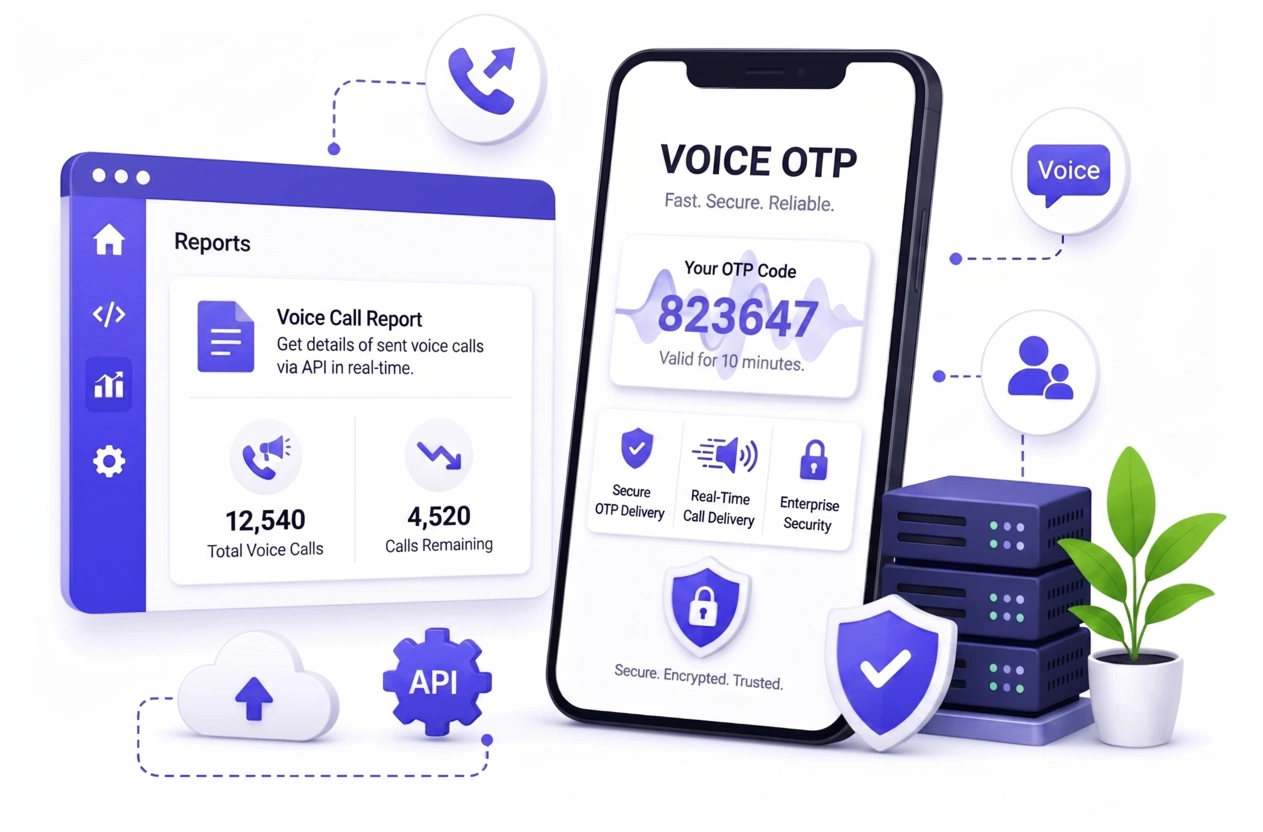
When an SMS does not arrive, an automated call reads the code out instead. Same API, works on feature phones, and reaches numbers where SMS delivery is weak.
Your personal support executive.




Based on 1000+ feedbacks

Technical Specification
Built as a production verification channel, not an add-on
Why Choose DV Connect for Voice OTP?
When the SMS does not arrive, the phone rings instead
Some percentage of your OTP messages will always fail: a weak signal, an overloaded operator, a full inbox, a handset that filters unknown senders. Every one of those is an abandoned signup or a failed payment. A voice call closes that gap.
The same API you already use for SMS OTP takes one extra endpoint. Trigger the call after your SMS timeout, and the customer hears the code read out twice in the language they use. It works on the oldest feature phone in the market and needs no data connection at all.
What Our Clients Say About Our Messaging Service
Feedback from fintech, lending and marketplace teams
We added the voice fallback after a sixty second timeout and our completed-verification rate moved up several points immediately.
A large share of our users are on feature phones. Voice OTP is not a nice-to-have for us, it is the primary channel.
Integration was genuinely one endpoint. It took less time than the meeting where we decided to do it.
Hindi playback made a real difference with our customer base. Support calls about "OTP nahi aaya" dropped off.
Verification On Other Channels
What to pair with voice OTP
Frequently Asked Questions
How voice OTP works, languages, DND, charging and fallbacks
You call the API with the mobile number and the code. Our system places an automated call and reads the digits out clearly, twice, so the customer can note them down. No app, no data connection and no smartphone required.
Use it as a fallback when the SMS has not been read within thirty to sixty seconds, for customers on feature phones, in areas with weak SMS delivery, and for older users who find a spoken code easier.
No. Voice OTP is not covered by the DLT SMS framework, so you can start immediately without registering an entity, header or template.
Digits can be read in English, Hindi and major regional languages. You pass a language parameter with the request, so the same integration serves customers in whichever language they prefer.
Yes. Verification calls are transactional in nature and are placed to DND registered numbers as permitted, because the customer has requested the code.
Per connected call, in 30 second pulses, and only for calls that connect. Charging is delivery based, so if the call is not delivered or not picked up, no amount is cut. A typical OTP call finishes well inside one pulse. Unanswered and rejected calls are not deducted.
The system retries according to the retry count you set. The final status is available from the delivery status API, so your application can check the result and fall back to another channel if the code was never heard.
Yes, and most customers do. Send the SMS first, and if the code is not entered within your chosen timeout, trigger the voice call from the same flow.
Calls are typically placed within a couple of seconds of the API request. Connection time after that depends on the receiving operator and handset.
No. Voice OTP credits stay in your account until they are used.
What Is Voice OTP?
A voice OTP is a one time password delivered as an automated phone call that reads the code aloud, rather than as a text message. The customer answers, hears the digits, and types them into your app or website.
It is normally used as a second attempt rather than a first one. When an SMS has not been read within thirty to sixty seconds, when the customer is on a feature phone, or when they are somewhere the SMS is slow to land, a call gets through where the message did not.
Voice calling sits outside the DLT SMS framework, so there is no entity, header or template registration to complete before you start, and the code can be played in English, Hindi or a regional language.